
Parallel Tracks to Launch
Every organization is becoming an AI organization, not because it is optional, but because AI is rapidly becoming part of how work gets done. Large language models are already embedded in everyday tools, shaping how teams write, analyze, research, and communicate.
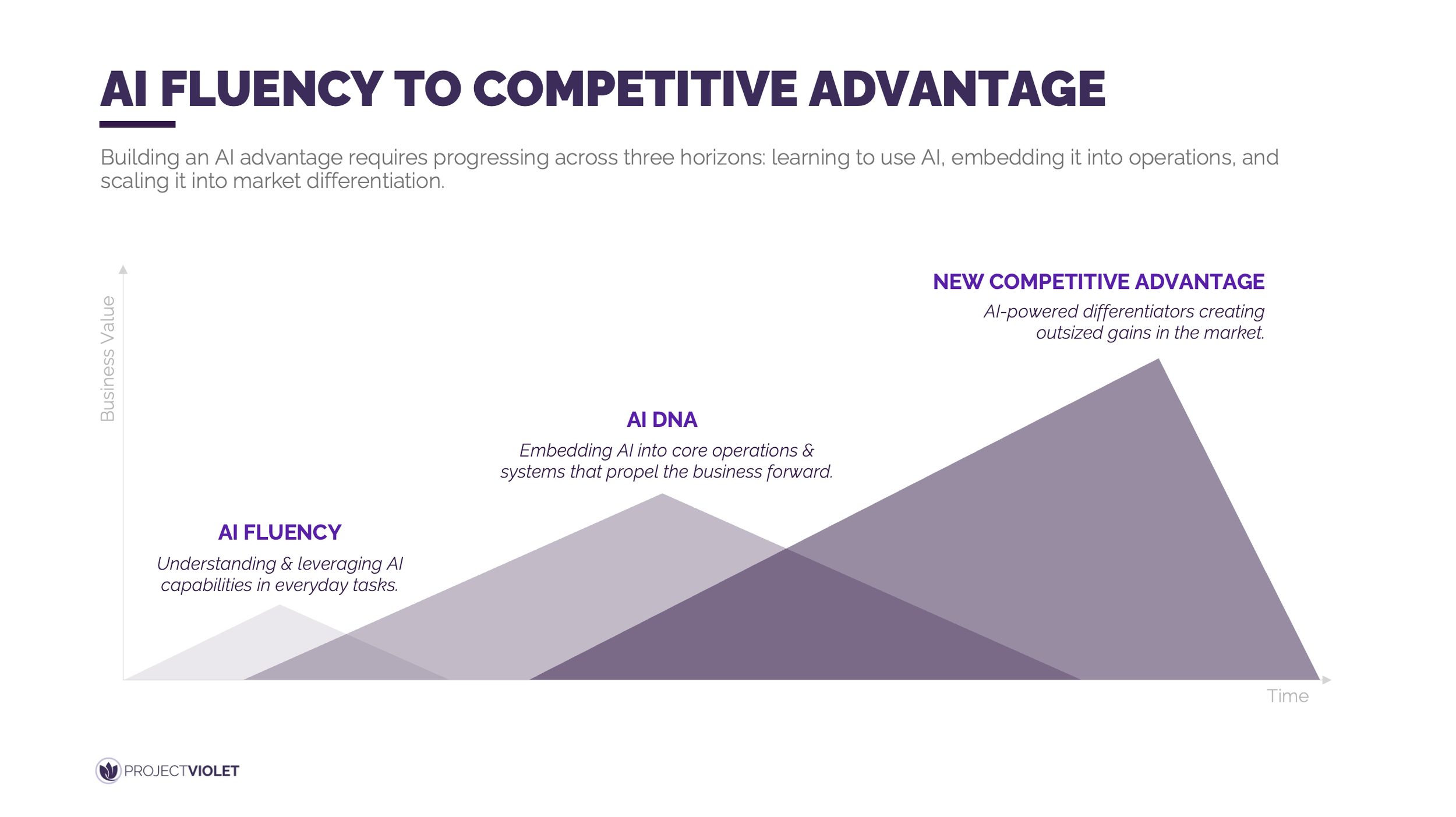
AI fluency is necessary, but it is not a durable source of competitive advantage. As access to AI tools expands, early productivity gains quickly normalize across industries. What once felt innovative becomes expected as teams across the market learn to prompt, draft, analyze, and synthesize with similar capabilities. When fluency is widespread, it no longer separates leaders from followers or creates sustained advantage.
The organizations that succeed will move beyond individual usage and embed AI into their core operations. This means integrating AI into workflows, systems, and decision processes so it consistently shapes how work is done at scale. From that foundation, AI can drive differentiation through faster execution, higher quality outcomes, and new ways of competing.
Getting Started
Most organizations treat AI adoption as a linear exercise, moving from strategy to governance to tools before inviting teams to experiment. The intent is control, but the outcome is often slower learning and delayed value.
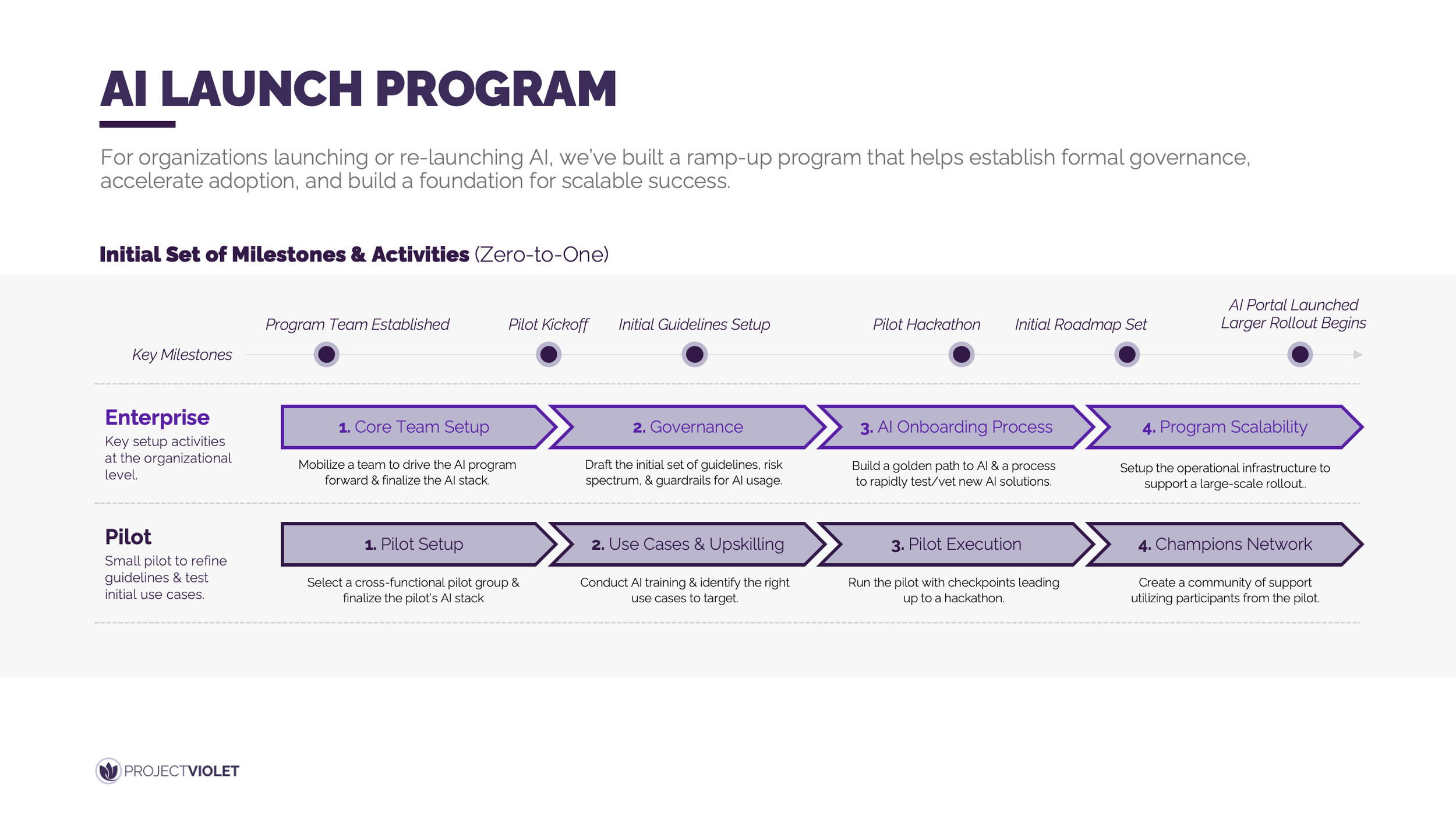
AI enablement is more effective when enterprise foundations and pilot execution run in parallel, with each informing the other in real time. While enterprise teams focus on governance, guardrails, and scalable infrastructure, a small pilot group begins applying AI in real workflows under light but intentional constraints. This parallel motion keeps policies grounded in reality, accelerates learning, and prevents overengineering before value is proven. The pilot does not wait for perfect answers, it creates the evidence needed to refine them.
In practice, this means launching a pilot shortly after minimal guardrails are in place and evolving both tracks together. Enterprise decisions are pressure-tested against actual usage, while pilot participants become early champions who accelerate adoption later. The result is faster momentum with lower risk and a clearer path from experimentation to scale.
Mapping the AI Opportunity Landscape
Understanding where AI can create value requires a clear view of both current capabilities and future ambition. This framework uses four quadrants to structure how organizations think about AI tools, use cases, and levels of integration across the business.
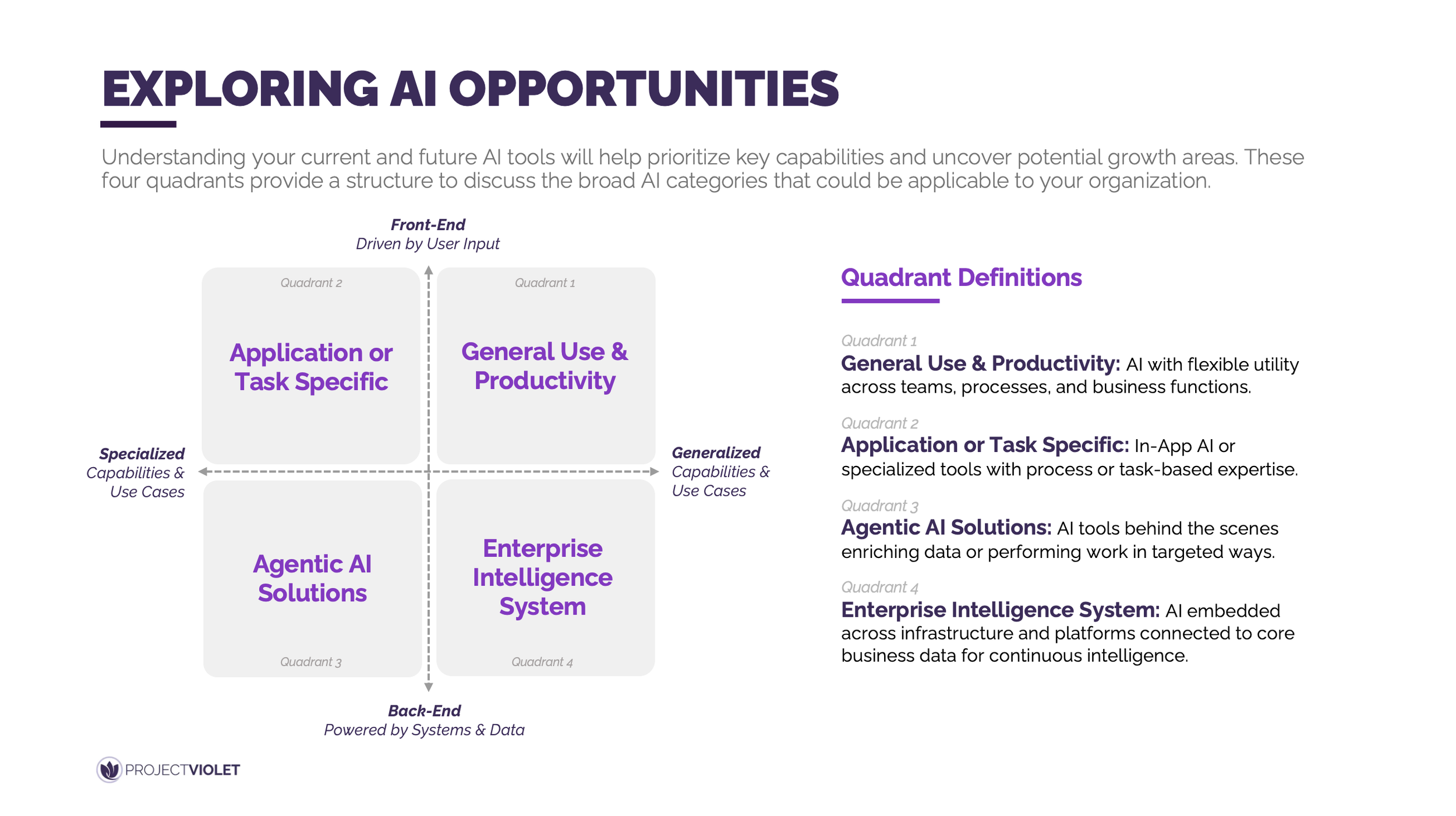
Most organizations create the fastest impact by starting in quadrants one and two, where AI augments everyday work through general productivity tools and task-specific applications. These areas are front-end, user-driven, and easier to pilot, making them ideal for building fluency, testing governance, and proving value quickly. This whitepaper is intentionally focused on these quadrants, where teams can integrate AI into real workflows with minimal dependency on complex data engineering or enterprise platforms. The goal is momentum, learning, and confidence, not large-scale transformation on day one.
Quadrants three and four represent a different class of effort. Agentic AI solutions and enterprise intelligence systems are typically back-end, data-driven initiatives that require stronger architecture, integration, and operating models. These are natural next steps once the initial pilot is complete and should be approached as longer-term programs that build on the lessons, champions, and foundations established earlier.
Return to the table of contents or use the navigation below to continue.
Looking for more support?
Leadership Lab: Learn alongside other leaders as you apply AI in real workflows, share lessons learned, and build the leadership skills needed to guide teams through change. Explore Leadership Lab
AI Pilot Program: Partner with us to design and launch a practical AI pilot program tailored to your organization. Learn More